Sunday, September 28, 2014

Blog Post 6

Project Based Learning Part 1: Experiences of a 3rd Grade Teacher 

  • PBL is not only a means for students to show achievement, but a means for them to learn. 
  • As the teacher, you should create a project based on the content the students need to learn.
  • Projects should have an audience, be based on student interests, have a sense of community involvement, and be driven by content.
  • Students should be given the opportunity to reflect upon and revise their work. Give them the opportunity to defend what they did. If you know what they were thinking when they did something, it may have help you to understand their view point better. 

Project Based Learning Part 2: Experiences of a 3rd Grade Teacher

  • Teachers have to be sensitive to the parents' wants. Even though I don't agree with the parent Capps talked about in the video, I think it is important to try to reach a middle ground with them. I can understand why he wouldn't want his child to do a project about a culture that we are at war with, especially since the parent was in the military. So, even though I don't like the idea of giving the student an alternative assignment, I would do it out of respect for the parent.
  • Don't limit students by giving them requirements. Instead, give them guidelines.
  • Record (visually or written) students when they discuss the reasons why they liked one project more than another. This gives you feedback on how to improve the projects for later students.
  • Give students a choice in doing the project: topic, method, etc.

iCurio 

  • An online tool that allows students to safely search the Internet.
  • It has a storage capacity for students to be able to save their search items.
  • Students can search by criteria.
  • It can read the webpages to the students.
teacher at whiteboardDiscovery Education

  • It brings experts into the classroom via video.
  • It gives students the opportunity to watch, rather than read, the material. This usually helps students to better understand certain concepts.

The Anthony - Strange list of Tips for Teachers Part 1 

  • Be interested in learning yourself. Information is always changing. You have to keep up with it.
  • Work is not separate from play. You should enjoy learning new methods and tactics for work. 
  • Be flexible. Always have a backup plan. If something can go wrong, it can, and it will.
  • Start with a goal in mind.
  • Have student engagement at 100%  all the time for every project. 
  • Allow students to reflect, revise, share, and work with an audience.

Don't Teach Tech - Use It

  • You should not teach technology. Instead, just introduce it, and let the students learn how to use it themselves.
  • Build off of preexisting knowledge of technology. Get students acquainted with one program, then add another later on. This gets students used to using technology. 
  • Build in time to reflect on how well the use of the technology went with the project and how it can be improved the next time.
  • Use the programs yourself before introducing them to the students.

Additional Thought About Lessons 

  • Lessons should be thought of as 4 layers; year, unit, week, and daily.
  • Use this method of organization to plan how to achieve teaching concepts.

C4K September

movie poster from La LunaFor my first C4K assignment, I received Dhara. She is an 8 year student at Pt England School in Auckland, NZ. In the post I commented on, Dhara had written two paragraphs describing the opening scene of an animated film, La Luna. After writing the two paragraphs, the kids were supposed to pick which one of their paragraphs that they liked better. Dhara had chosen her first paragraph as the better one. In my comment, I explained to her who I am and where I live. I agreed with her that her first paragraph was better. I told her that both paragraphs were well written, but I liked the first one more because it contained a lot of descriptive details. After reading her post and before commenting on it I looked up the clip up on YouTube. Her first paragraph made me picture a very similar scene when I read it.
A picture of the book The Elephant Whisperer
For my second C4K, I received Keanan. He is a student in South Africa. In the post I commented on, the students were to answer to questions about The Elephant Whisperer. The first one was about how they thought the elephants felt being relocated. The second one was about what they thought would happen next in the story. Keanan thought the elephants were confused, shy, and angry. He thought that the leader of the elephants would break down the fence enclosing them so that they could escape. In my comment, I said that I've never read the book, but it sounded interesting. I told him that I agreed with how he said the elephants felt after being relocated. I also said that I hoped his predication comes true, so the elephants could be free.

For my third C4K, I received Madison. In this post, the students were to write a story using only 100 words. Madison wrote about a girl named Pepper that wanted a pet, but couldn't figure out what she wanted. Her brother suggested a crocodile, and her sister suggested a goldfish. They went to a pet store where she picked out an orange kitten. I commented that her story was very well written. It was so good that it could be a short children's book. She used punctuation better than some adults I know. I told her I was surprised by how well she could use quotation marks and that she did a really good job on the assignment.

Thursday, September 25, 2014

Saturday, September 20, 2014

Project 3 Presentation

Blog Post 5 Part A

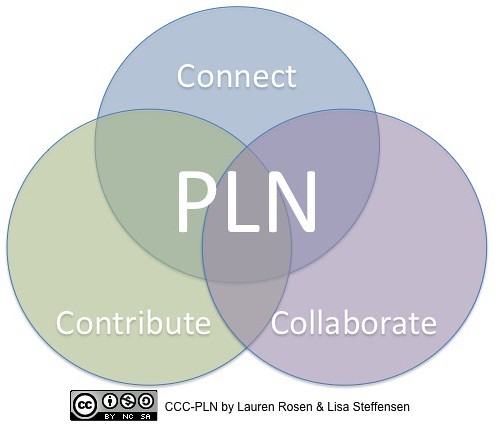
diagram of programs useful for developing PLNsPersonal Learning Networks (PLN) are great tools for people in the education field. They contain people and resources that you can use for collaboration and advice. As described on The Fischbowl, PLNs tend to build off of one another. I've realized through reading the assignment for this week that, that is the reason why Dr. Strange requires us to include links in our blog posts. If someone likes what you have to say or has similar interests, they'll want to know where you got your information, what other sources you used, and where else they kind find MORE information on the subject. It's kind of like writing a research paper. If you find a source that you particularly enjoy, you'll want to see where their information came from. The original document may contain more useful information than the one you read. It's a never-ending cycle of knowledge. PLNs are just the way in which you access this knowledge.

The necessity of developing a PLN is best described by Michael Fawcett in his PLN video. On a small scale, a PLN can keep you in contact with your colleges from your school. If members of your school have a Twitter account, you can easily access them at anytime. It's a great way to keep in contact with coworkers and post reminders about upcoming events. Having a school Twitter page can keep parents and members of the community up-to-date on what the students are doing at school. On a larger scale, PLNs can connect you to educators worldwide. As we've been doing for the past few weeks in class, blogs are a great way to reach out/meet other teachers/students. Students in other parts of the United States may be doing work that is similar to what is going on in your classroom, so it may be beneficial to your students for them to read the others' blogs. Making the connections with students in various parts of the world become a meaningful experience. This makes learning more fun and the rates of retention become higher. It can expose teachers to new ways of thinking, different ideas on how to run the classroom, and new ideas for projects to incorporate in lessons. Think of it as a really big meeting. Who better to discuss work with than a fellow teacher?


I think the best way to start a PLN is through blogging and Twitter. These are gateways to great information, and the perfect place to start for beginners. Get your name out there. Post things that people actually want to read and things that you are actually interested in. People with like interests will find your posts and comment on them. Viola! There's the beginning of your PLN. The more time you invest in it, the better it will become. This is, in fact, how I am starting my own PLN. I was fortunate enough to be forced into taking this class. I must admit that I hated Twitter and thought that it was stupid before taking EDM310. I now see a usefulness in it. It has connected me to other people that want to become teachers, something I have searched for since the beginning of my college career. So, before I have even started my teaching, I have a network of people that can help me once I get started. It can only get better from here.


Sunday, September 14, 2014

Blog Post 4

What do we need to know about asking questions to be an effective teacher?

woman with question marks around her headA lot of times, teachers misuse the questioning process. They don't realize the potential knowledge that students can gain from the way questions are asked. According to Ben Johnson, one of the biggest mistakes that teachers make is when they ask, "Does everyone understand?" Some students may not realize that they don't understand. They may even understand part of what you are teaching, but they aren't quite sure at which point you lost them. Asking, "Does everyone understand?" is a waste of time. Everyone is either going to nod yes or say nothing at all. When classes are given questions that are open to everyone, the individual student is going to wait on someone else to answer. Johnson suggests asking a question, waiting three seconds, and then calling a name. This gives everyone time to formulate an answer. Make sure that you ask the questions in a random order. If the students know when they are going to be called on, they will zone out until it is there turn.

smiley face thinkingAsking Questions to Improve Learning tries to get the teacher to think about the purpose of the questions being asked. Do you want students to develop critical thinking skills or master a core concept? Asking a question in a certain way can change the outcome of the answer. If I ask a student to tell me their position on an argument, they only have to think about one side of the issue. However if I ask a question more like this," How do you think that this issue is viewed by those with whom you disagree?" The students will be forced to think of the subject from a different perspective. This could lead to changed views, better understanding of opposing sides, and even better comprehension of the issue at hand.

red question mark
You should try to avoid leading questions. You want the students to be able to think of their own answers and not pull their answers from the question. The main point here being for students to THINK. If you ask yes-or-no questions, follow up with questions like: Why? How? Defend your answer. Explain why you answered the way you did. One of the best teachers I had was my 10th grade English teacher, Mrs. Danis. She always gave us multiple choice tests, but we had to defend our answers. I hated doing it with a passion, but I learned so much from that class. It makes you connect the things you've learned in class. "Okay you know that C is the answer, but tell me how you know. What made you put that as your answer?" Knowing that something is true shows intelligence; however, knowing why something is true take it a step further.
elephant with question mark over head
Other things to keep in mind when asking students questions are to ask one question at a time. Let the students focus on gathering one bit of information so that they can fully analyze it. Ask different types of questions: closed, open, and managerial. You may want to check to see if students are paying attention with a closed-ended question. Open-ended questions are great for having students think or to start discussions. Managerial questions are to check for understanding. Give students time to think about their answer before moving on. The more time they are given to explore an idea, the better their answer will be. Don't interrupt them will they are giving an answer. You may disturb their thought process. I think this is the most important thing to take from this blog post for teachers. Include questioning time in your lesson plans. Ask questions every day and as often as possible. Ask them in ways that get students thinking. Make them want to go home and research things on their own. Keep them interested!

Project 15

1.Bing
I've personally never liked bing. I think it may just be because I'm so accustomed to Google. However, I do love their image search. You can filter the results by size, color, type, layout, people, date, and license.
yahoo smiley face
2.Yahoo
Yahoo is great for keeping up with the news and celeb gossip.

3.ixquick
This search engine doesn't save your search data. This could be useful if you are planning a surprise for someone and don't want them to find out about it.

4. Recipe Bridge
This search engine is a database full of recipes. This is perfect for snack ideas in the classroom and ideas for dinner tonight.

5. Dogpile 
Dogpile searches Google and Yahoo at the same time. This gives you more results in less time.

ask jeeves logo6. Ask (I think they should have left it as askjeeves.com.)
This search engine has a list of related searches and related questions. This is useful if you don't know how to word what you are trying to search for. They also have quizzes on their page that I find fun and informative.

7. Free Book Search
This site is great for avid readers. It searches several sites at once for book reviews, fan fictions, and even copies of the actual text.

8.WolframAlpha
This site is great for math problems. You can enter  symbols for pi, degrees, infinity, and square root
directly into the search bar. If you type in a type of food, it pulls up the nutritional information. It analyzes images: dimensions, size, aspect ratio, color space, and assumed color space. And so much more....

C4T # 1

For my first C4T assignment, I received Nathan Horne. He is the founder of iPhys-Ed.com. He uses this website to promote the uses of technology in physical fitness. In the first post I commented on, Horne explained how he used Google Sheets to provide students, parents, grandparents, and many others with live scores from the Swim Gala he was coaching in. Google Sheets is much like Excel. You can enter a formula in each cell, and have the document do all the work for you. After creating the document, Horne made it public so that anyone with a mobile device could view it. This provided everyone with access to real-time scores-- even the parents that couldn't make it to the event due to work. In my comment, I told Horne that I thought it was a great example of how technology is useful to 21st century teachers. The document can be used over and over again, it kept everyone engaged in the activity that was going on, and was accessible to parents that were unable to attend the event.

#100ActiveDays logoIn the second post I commented on, Horne described an event called #100ActiveDays. The point of the event is to stay active for 100 days doing a variety of activities: hiking, kayaking, running, etc.
shoe print with the words get active inside of it


You can join the movement by doing the following:
1. Follow them @100ActiveDays or like them on Facebook.
2. Register here.
3. Post your active picture to twitter, instagram, and Facebook using the #100ActiveDays

In my comment, I included the obesity prevelance rate for Alabama (33%). I told Horne that this challenge would be a great way to get active and combat the rate of obesity in our state. We could instill a love of being active in our children that they could carry with them into adulthood. I think the best way to incorporate this into our schools is to pair up with another teacher and have physical activity competitions during recess.

Sunday, September 7, 2014

Blog Post 3

Peer Editing

According to Tutorial Peer Editing  and Peer Editing, there are three steps to quality peer editing: compliments, suggestions, and corrections. Start out by complimenting the things that worked well in the paper. Was it interesting? Did it hold your attention? Did they explain things in a way that anyone could understand? What did you like most about it? After that, add your suggestions. Should they use more interesting words? Add more details? Explain something more thoroughly? Finally, make corrections. Use proofreading marks to show them things they make have forgotten to capitalize, words they may have misspelled, or punctuation they may have left out.

proofreading marks
Think of the way you would react to someone criticizing your paper. Would you want them to focus only on the things that you did incorrectly, or would you want some positive feedback as well? (Watch this video for the top 10 peer editing mistakes.) It is important to let the person know the strengths of the paper as well as the weaknesses. Stay positive when giving feedback. Try to avoid negative statements, such as, "This paragraph doesn't make sense." Instead, say something like this, "If you add a few more sentences to this paragraph, it may make it easier to understand." Be specific. Tell the person exactly what they need to change to make the paper better. Mark grammatical, spelling, and punctuation errors on the paper. If you suggest a change, tell them why the change would make the paper better. Remember that peer editing is to help the person to better develop their ideas and writing habits. Explaining why your suggestions would be beneficial to their work helps them improve on future assignments.


Sunday, August 31, 2014

Blog Post 2

Professor Dancealot

The message from this video
man dancing
is that students need to actually get involved and engaged in
learning. It is very boring to sit through a lecture and just listen to the teacher explain the material. The students don't learn very little, if anything, through this method. The author of the video makes this point through showing a dance class that learns about dancing in a lecture style class. The students learned the material. They knew the steps to the dances, but when it came time for the exam, they couldn't apply what they learned. I completely agree with what the author was trying to say through this video. The typical style of teaching in today's schools leave our students with only slight knowledge. I'm currently a junior in college, and I have taken several of these lecture style classes. I can honestly say that I don't remember much from any of these classes. They don't actually teach anything. They make you remember the material for a short while, but you don't actual learn anything from them.

Teaching in the 21st Century

Roberts thinks that teaching is completely changing in the 21st century. Teachers are no longer the only source of information. Students have access to anything, anytime, anywhere. Teaching is becoming more of a filtering process. How do you use these technologies? Which sources do you trust? Where is the best place to find information on this topic? With all these new ways to gather information, should curriculum be based on facts or skills? According to Roberts, we as future educators, need to be prepared to adapt to the changing times. We need to get away from the memorization techniques used today. Students need to know how to use what they learn, not just facts.

Outline:

-Students have unlimited access to information.
They have the Internet with them all the time on a computer or a phone or an iPad.

-Students need to learn how to use this information.

A man with twitter and Facebook in his brain-Should curriculum be focused on facts or skills?

We should teach the students things that will be useful to them later on in life like how to choose a credit card, how to fix their cars, and whether they rent or buy.

-Education goes through stages: remember, understand, apply, analyze, evaluate, and create.

Today creating means blogging, podcasting, animating, planning, recording, designing, and programming. Students have to use tech skills in their creations: paraphrasing, attributing, subscribing, editing, twittering, experimenting, reflecting, tagging, commenting, searching, posting, locating, linking, integrating, networking, bookmarking, mashing, and uploading.

-We have to teach our students about responsibility, realiability, and integrity.

They need to know that it's wrong to pirate, plagarize, slander, and mis-use copyrighted material. They also need to know about confidentiality and professonalism.

-Lessons need to be relevant, challenging, and engaging.

-Engaged Vs. Entertained


Entertainment is passive, for enjoyment, short-lived, doesn't require relevance, allows escape from problems, and uses others creativity.

Engagement is active, for learning, has long-term results, meaningful and applicable, solves problems, and uses your own creativity.

-For teachers to do.

See what's out there, start small, collaborate, and take risks.


I completely agree with the way Roberts sees teaching changing. There is way too much information out there for us to stick to lecture based teaching. Our technology is advancing extremely quickly. Why not use it to our advantage? These new advances in technology will greatly affect my teaching. I'm acquainted with some of the technologies that I'll have to use; however, I've never had to use most of them throughout my education. I'll be learning along with my students how to use these new programs. I may, in fact, learn more from them than they will from me.

The Networked Student

diagram of computers being linked together
Throughout this video, I really did ask myself, "Why do we need teachers?" It seems like everything we want or need to know can be found in some way, shape, or form online. It may take a lot of time and a lot of work, but if we really want to, we can synthesize an abundant amount of information. I think of it as writing a research paper. You think about what you want to know more about, research it, and put all the information together. I've always learned way more doing research on my own than sitting in a classroom. So, why do we need teachers? Well, I thought of it like this. Think about taking an online class. You don't understand what you are supposed to do, have problems understanding the information, or need help figuring out how to use the web component. The teacher is there to answer your questions, help you gather your information, and show you how to use the programs efficiently. Teachers are more like guides. They show you how to learn and what you need to do to get the information you desire. We don't know everything, but we can show you how to access it.

Harness Your Students’ Digital Smarts

Davis believes in empowering students to make connections, learn from each other, and teach themselves. I agree with her. Getting connected with people all over the world can open so many doors for students. If someone sees the work you've been doing online and really likes it or thinks that it could be beneficial to them or a company, you could have a job opportunity in a place that you never even knew about. We learn best when we can share our ideas with others. We start a conversation, someone adds to it, someone adds to that, and before you know it, you have this beautiful discussion of meaningful ideas. Some of the most engaging and enjoyable learning experiences I have had have been in discussion based classes. Getting connected with people around the world can open your mind to new ways of thinking and new perspectives.

Who’s Ahead in the Learning Race?

I believe that the elementary students are ahead in the learning race. They are being exposed to more and more technologies at younger and younger ages. This is my first time ever blogging, but there are elementary students that know how to use HTML coding at a very proficient level. I'm using programs that I've never heard of before that they are already well acquainted with. My boyfriend's three year-old niece shows me how to use things on my phone that I didn't even know were on there. I think part of the reason my generation isn't as advanced in this area is because we didn't grow up with the technologies. We were never made to use them in classes or even knew that they existed (or they didn't exist). It's like how older generations don't know how to use computers as well as my generation does. We grew up with the technology. We learned how to use it first-hand. Then, in turn, taught our parents. The same thing is happening now. The younger generation is learning how to use the new technologies and then teaching us.

Flipping the Classroom

young girl sitting at a computerFlipping a classroom is new to me. I think this approach could be useful to me as a teacher. I think it would help to save instruction time. In college, you read the chapter before the class it is going to be discussed in. This prepares you for the class, allows you to write down thoughts or questions you have about things that you didn't understand, and is more efficient when it comes to time. If this was implemented in the elementary classroom, it would help get the students more engaged in learning. They have a little prior knowledge to the subject being taught and are less apprehensive about sharing their thoughts. It's also a great way to prepare them for college. When I first started at South, it was hard for me to get used to the amount of independent work. If students are introduced to this at an early age, it won't be as much of shock to them as it was to me.

Bringing the Locker Room into the Classroom

This article made me think of what I usually do with new classes. I gauge how the class is going to go within the first few weeks. I observe when the teacher gives tests or quizzes and what information they focus on. I use this to set up for the rest of the class. After I learn how the professor operates, it's easy for me to make a good grade in the class. In a sense, I learn their "system." After realizing how beneficial it is to my grades to experience how the class is set up, I realized that the same thing could be true for my students. If I let them know ahead of time exactly what is expected of them and walk them through the process, they will succeed. I look at it as learning how to learn from a source. I learn how to learn from my professors. Each one has different methods of teaching, so I have to adjust how I learn in each class. I want to teach my students this give-and-take routine so that they won't have difficulty adapting to new teaching styles.

Sunday, August 24, 2014

Blog Post 1

I cannot put off taking EDM 310 any longer....

Clip art of a nervous student
The thought of taking EDM 310 has been very intimidating to me since I first heard about the class. I know it is a much needed course, or it wouldn’t be a requirement before candidacy. However, several things scare me about this class: the experiences I’ve heard from previous students, the time requirements, the amount of work involved, and the fact that I’ve never taken a class like this before. I know that the hardest classes are, often, the most beneficial. Therefore, I am excited but somewhat apprehensive about taking this class.

What things have I heard about this class?

I’ve heard many mixed reviews about EDM 310. Some people have told me that it was one of the worst education classes they have ever taken. Other people have told me that it was an easy class, but it had a very heavy work load. I’ve even heard people say they really enjoyed the class, and they feel like it really prepared them for the technological aspect of being a teacher. Overall, the most common thing I’ve heard about the class is that you really do spend the nine hours a week working on the assignments. That’s something that I found hard to believe at first. Almost every professor I’ve had has told me that a class really takes triple the amount of time per credit hour. For example, a one credit hour class would take three hours a week inside and outside of the classroom. In my experience, this wasn’t true. I could wait until last minute to do all my assignments and still make an A or a B. However, I’m going to heed the warning and work on the assignments as frequently as possible.

What fears do I have about this class?

Clip art of a scared man by a computer
The thing that scares me the most about EDM 310 is the fact that I’ve heard it is very time consuming. I now have two jobs, so time is a scarce thing these days. I work both jobs at least three times a week, sometimes even more frequently. One of my jobs is in Mississippi, so I spend at least an hour and a half traveling to and from work. School takes up another big chunk of my time. I’m in class all day on Tuesdays and Thursdays. I use the time in between jobs, before and after class, and Sunday evenings to do my homework. I know it’s possible to make this semester work. I just really have to work on my time management skills, which I am lacking in. I tend to procrastinate a lot. I’m trying to break myself of this horrible habit this semester. I usually am able to turn all my work in on time. I just have to stay up until 9:00 in the morning to complete it. It’s not a good precedent to set for my future career. My students deserve better than that. If I wait that long to prepare for a lesson, my students may not get everything that they can from it. I don’t want to deprive my students of a quality education.

EDM 310 is one of a kind.

I’ve never taken a class like EDM 310 before. Everything is online and constantly changes. You cannot print something out to use as a reference in the future, which is something that I like to do for all my other classes. It helps me to stay organized, and keeps me from getting overwhelmed. I have something tangible to work with. When doing work strictly on the computer, I often forget where to find my documents, get overwhelmed by having so many windows open, or get distracted easily by social media. It is definitely going to take some getting used to working in this manner.

What will be the most challenging things about this class, and how will I face them?

Clip art of an extremely stressed out person.I believe that the most difficult aspect of EDM 310 for me will be getting used to the fact that I can no longer procrastinate. It’s going to be very challenging for me to change this about myself. This is a habit that I developed a long time ago in high school. The school I went to had an extremely inept education system. I was able to skip class, wait until last minute to complete projects, and wait to do homework until the day it was due. This has caused me several all-nighters in my college career. However, I’ve never had a class that had such a heavy work load that it has caused me to change my procrastinating ways. This semester, I want to address this problem before it becomes an issue and hinders my grades. I’ve set numerous reminders on my phone to remind me of when my work is due. I bought a daily planner and a calendar that I’ve been making myself use every day. I, also, bought stickers that go on the wall that you can write on with dry erase markers or chalk. I can usually remember upcoming due dates and project deadlines without writing them down, but I’ve been so busy lately that the simplest of things have evaded my memory. I figured that if I saw all the things that I had to do by the end of the week in multiple places that I wouldn’t be able to forget about them. It’s a way of making myself do my work.

Other thoughts on the class?

As far as any other concerns for this class go, I do have one. The use of HTML coding hasn't been a concern for me since the days of Myspace. I'm going to have to re-familiarize myself with the use of it. So far, this has been pretty difficult for me. I may have to go to the lab to get help with it. However, I have been trying to solve this problem on my own by using several websites. One that I have referenced frequently can be found here. Maybe it will help others as much as it has helped me. Good luck, guys!

Practice Blog Post

Who am I?
My dorm room from my freshman year of college.


My name is Lacey Roach. I’m originally from Moss Point, Mississippi. It is a very, very small town. I had about 175 people in my graduating class. I moved to Mobile two years ago when I started college. I chose to go to USA because it’s only 45 minutes away from home. I have a very close knit family, and I didn’t want to be far away from them. It took me a long time to get used to not being with them all the time. During my freshman year, I went home every weekend and, sometimes, even weekdays. One thing that made me extremely homesick was the fact that my sister was pregnant the year that I left. I also tried to keep up an old high school relationship. I was new in town, away from my family, away from my boyfriend, and very, very lonely.

Vacation with my boyfriend's family.
I roomed with my best friend, Katie, for my freshman and half of my sophomore year. It was a horrible mistake. We went from being extremely close to hating each other. I couldn’t stand the sight of her some days. After the first semester of our sophomore year, we decided for the sake of not killing each other that we would both find new roommates. This was the best thing we could have done for our friendship. After a few months of time apart, Katie and I mended our friendship. However, we still aren’t as close as we once were. I moved in with a girl named Vanity that I met through the Leadership Learning Community, and Katie moved back home. Through moving in with Vanity, I met my current boyfriend, Sedrick Malone. He is an amazing person and an even better boyfriend. He is the best thing to ever happen to me, and he treats me like a princess. It’s funny to think that if I hadn't lost the relationship I once had with my best friend that I wouldn’t have met the man that I’m going to one day marry.

Why do I want to be an educator?
This is from when I did an activity in my niece's Kindergarten class four years ago.

I didn’t realize that I wanted to be a teacher until my senior year of high school. Teaching was always something I told myself that I would never do. I especially didn’t want to teach kindergarten. I didn’t want to have all of the responsibility that comes with teaching children of such a young age. Kindergarten is the foundation of most children’s education. Some students come in not knowing how to spell their own name. These students will be using the things you teach them every day for the rest of their lives. That’s a scary thought. If you mess up, or don’t do your job very well, your students’ could fall far behind in their cognitive development and struggle to catch up. However, now the reasons that I didn’t want to become a teacher are the exact reasons why I do want to become a teacher. Yes, the responsibility is a scary thought, but at the same time, it’s a beautiful thought. You will be instilling not only knowledge but, also, morals and life lessons in these young minds. A little piece of you will always be with them, even if they don’t remember you. The impact you have on these children will last for their entire lifetime.

I'm teaching the kids how to make jewelry out of recyclable materials.

What do educators do?

Educators do more than they are given credit for. They make lesson plans, buy materials that aren’t in the school’s budget, go to workshops, and so much more. A lot of people only credit teachers for the work they do in the classroom. However, a teacher’s day does not start and end with the school’s hours. There is so much preparation that goes into every lesson. We have to make sure each lesson we teach matches the state curriculum, adjust the lesson for students with special needs, and make sure that each student understands the concepts of the lesson. With the state always changing the curriculum, teachers have to adjust to the new requirements. This could include going to workshops, learning how to use new technology, and attending professional development meetings. Teaching is not just an 8 hour shift; it’s a full time job inside and outside of the classroom.

What are my passions?

I have recently developed a Pinterest addiction. I took EDU 346 over the summer. Creating a Pinterest account that could be useful to you as a future educator was our final exam. I now have two separate accounts. I use the one from EDU 346 for ideas for activities and helpful hints in the classroom.(View it here) I use my other account for social purposes. My boyfriend recently told me that he put a deposit down on my engagement ring. I immediately turned to Pinterest for ideas on wedding planning. (Check out my wedding board!) I now spend hours at a time on this website.

This is Sedrick and I on the night when he first met my family.

What do I do when I'm not in class?

This semester I may have bit off a little more than I can chew. I have two jobs, and I’m a full time student. On Monday, Wednesday, and Friday mornings I clean houses in Mississippi. I wake up at about 7:00 on those days, leave my house at 7:30, go to work, and come home around 1:00 or 2:00. When I get back to my house, I have about a four hour break until I have to go to my second job at Ross Dress for Less. I use this time to do my homework and catch up on my house work. Then, I go to work from about 6:00 until midnight. On Tuesdays and Thursdays I take 16 credit hours. On Tuesdays, my classes start at 11:00 and do not end until 8:00. Thursdays are a little bit better when classes end at 6:00. Needless to say, I’m a very busy woman this year.